2015년 4월 8일 수요일

[Research] The exact meaning of User Interface

The User Interface is the Means, Not the Ends


Designers pride themselves on the interfaces they design. It’s natural to think what one is working on is important. But sometimes designers can get so lost in the interface they forget that it’s for the user, not them. The interface can easily seem like the ends to the designers who are working on it. But for the user, the interface is the means, not the ends.

The User Interface is a Tool for Delivering Information

People use tools to do the things they can’t do without the tool. Users use interfaces to get information. Without the interface, the information has no way of getting to the user. The interface organizes the information into an understandable and consumable format. The information delivered from the interface to the user is one experience. And consuming the information is another. Therefore, there are actually two user experiences in the entire interaction.

Delivery Experience (motivates users)

The first is the delivery experience. The interface’s physical responsibility is to deliver the information to the user. However, its mental responsibility is to motivate the user to use the interface. What’s important is not just delivering the information in a quick, easy and efficient, but also appealing to the user’s emotions. Delivering the information in a beautiful and appealing way can motivate the user to use the interface even more. Therefore, the makings of a successful delivery experience isefficiency and emotional appeal.

Consumption Experience (satisfies users)

The second is the consumption experience. The information that the interface delivers is responsible for this experience. The goal for the consumption experience is to satisfy users. How much satisfaction the user gets will depend on theinformation quality. If the information the interface delivers isn’t high-quality, users will leave unsatisfied whether the interface is efficient and emotionally appealing or not. The interface is not the ends for users. The information is. Therefore, high-quality information is very important for a successful consumption experience.
High-quality information is:
  • accurate
  • up-to-date
  • relevant
  • useful
  • complete
  • easy to understand

A Successful User Experience Motivates and Satisfies Users

The interface and information both play a role in the user experience. One motivates users, while the other satisfies them. One is the means, while the other is the ends. It is not one or the other that the designer must care about. It is both. A successful means and ends means a successful user experience in the end. If designers continue to see the interface as the ends, users might use the interface, but they will never leave satisfied. A high amount of usage does not necessarily equal a high amount of user satisfaction. They are two different things. But both need the designer’s full attention.


sources from : http://uxmovement.com/

[Research] Make User Scenario using PERSONA

User scenarios are the stories that your personas act out. Basically, user scenarios are thought exercises (though represented visually) in which you predict how certain types of users — represented by your personas — will interact with your website in a given situation in order to complete a given goal.
User scenarios let you understand what your future users will look for when trying to complete tasks on your site. Even if your personas “fail” at the task, at least you now have a visual representation of your problem and can go back and solve it easily. User scenarios allow you to test your site structure before it’s fully developed and isolate problems before they become problems.

HOW TO MAKE A USER SCENARIO

The first thing you’ll want to figure out in creating a user scenario is a realistic goal for someone using your website. Once you have a goal (or task) the rest is a logic puzzle: knowing what you do about your persona, how would they behave on your site, step by step? This is where a thoroughly detailed and well-thought-out persona comes in handy.
We’re talking about a user scenario in its most basic form, but if you’re interested in more advanced concepts, see this usability.gov post about user scenarios.
After integrating your personas, a user scenario will then highlight the details about how your system could be interpreted, experienced, and used. Ben Hunt, creator of Web Design From Scratch, believes that scenarios add elasticity to personas by filling in the “why” behind the “who”. When creating user scenarios, he recommends taking into account these factors:
  • Persona’s environment —  Know where your persona is accessing your website, whether at work, at home, or perhaps in a coffee shop.
  • Persona’s mentality — Visualize the scene and know what is going through your persona’s mind. This is a good opportunity to figure out how the user feels when they interact with your site.
  • Impetus and motivations — Your persona is on your site, and you need to know why. Keep in mind the specific goal motivating the persona to interact with the web site, and understand why now, or what triggered the scenario.
  • External factors impacting use — These could be a wide range of elements, from the speed of the Internet, the amount of time at their disposal, or maybe even a distraction from loud construction happening outside.
To introduce teamwork into the process, you can also follow this collaborative 13-step guide to creating user scenarios.

A (REAL) SAMPLE USER SCENARIO

LUX, an international arts agency based in London, conducted an excellent sample of a user scenario for their website. The central purpose of the LUX website is to provide everyday users with access to various types of video art (though they also give developmental support for moving image artists).
For example, the persona, Harriet, a local art event organizer, has a problem: she needs to find a great film for her December event. Getting into her psyche, Harriet is specifically looking for a film with a winter theme. Her motivation might be that she needs to attract a larger-than-average attendance to make up for a small failure at the last screening.
Harriet starts out on the home page and quickly conducts a search. She spends a little time searching and browsing, watches a clip here and there, and finally settles on a film that interests her. She reads some details about the film, including reviews from both LUX and other searchers, plus bookmarks the artist for later screenings. Finally she puts the film in her basket and hires the artist during checkout. Harriet has successfully completed her goal — she found a wintry film for her December event.
As you can see, the user scenario indicates her motivations and thought processes.

PRIORITIZING FEATURES

The great takeaway from user scenarios is knowing which aspects need to be prioritized and which ones are less important. Redesigning your UI in response to the user scenarios involves knowing what needs to be fixed first.
Jeff Sauro, founder of Measuring Usability LLC, explains how to handle the intimidating pile of tasks facing every designer. His approach is novel, but effective: have the users prioritize the tasks for you, an idea originally proposed by Gerry McGovern in his book The Strangers Long Neck.
  1. List the tasks — Present the tasks — features, content, functionality, etc. — in a randomized order to represent users interested in your site.
  2. Have the users pick five — The user reads the list, skimming for keywords, and picks the five tasks most important to them.
  3. Graph and analyze — Tally up the votes and divide by the number of users. The “long neck” shape most often found is the inspiration for McGovern’s title.
That’s the basic gist: not only do you now know what your top priorities should be, but you have them verified by your users. Sauro explains in another article how this long neck organization of problems coincides with the Pareto principle.
The Pareto principle, also known as the 80-20 rule, was originally proposed in 1906 by Italian economist Vilfredo Pareto, who noticed that 80% of the country’s wealth and land was owned by 20% of the people.
Interestingly enough, it’s not just a country’s wealth that runs on this principle. Microsoft noted that by fixing the top 20% of the most reported bugs, 80% of theerrors and crashes would be eliminated. What that means for you, is that by addressing the top tasks in your long neck graph first, you’ll end up taking care of most of the problems right away.
But there’s no one way to prioritize your tasks, and McGovern’s method can be substituted or complemented by several alternatives, including the Kano methodthe QFD method, and cause & effect diagrams.

PLUNGING AHEAD WITH A PLAN

Don’t fool yourself into thinking that personas and user scenarios are all you need for a successful UI; in fact, this is just the beginning. In the grand scheme of things, understanding these elements are merely Step 0, and the real work is ahead of you. So why are we putting so much emphasis on this pre-game stage? Because starting out on the right foot will make the whole journey easier. Unless you know who you’re creating your web interface for andwhat they will do with it, then the how doesn’t really matter.


RESOURCE FROM:

HOW TO PERFECT YOUR UX WITH PERSONA SCENARIOS

BY JERRY CAO · UX DESIGN · APR 8, 2015

2015년 4월 7일 화요일

[Research] What is service design?

Service design is the activity of planning and organizing people, infrastructure, communication and material components of a service in order to improve its quality and the interaction between service provider and customers. 

The purpose of service design methodologies is to design according to the needs of customers or participants, so that the service is user-friendly, competitive and relevant to the customers. 


The beginning of Service Design

During the last three decades, economic conditions have changed fundamentally in western industrial nations. Without doubt, a fundamental change from a manufacturing society to an information- and service-based economy is discernable. While the share of services in the gross economic product is around 60-70%, business start-ups and new jobs can almost exclusively be found in the tertiary sector. Along with such rapid developments came new economic challenges.In the past, investments within research and design were made primarily in the manufacturing industry. Means and processes of production were optimised, products innovated, and investments in market research, marketing and design of products were made as a matter of cause while research, development and design for services was an exception.

This situation is now changing essentially – and this is where Service Design comes in.Within Service Design, Service Interfaces are designed for intangible products that are, from the customer’s point of view, useful, profitable and desirable, while they are effective, efficient and different for the provider.Service Designers visualize, formulate and choreograph solutions that are not yet available. They watch and interpret needs and behaviours and transform them into potential future services. 


In the process, exploring, generating and evaluating approaches are used similarly and a redesign of existing services is just as much a challenge as the development of new innovative services. An exhaustive definition of the term service design can be downloaded below. 


- See more at: http://www.service-design-network.org/intro/#sthash.tLqbOP4y.dpuf


The features of Service Design


this video on www.nilehq.com


SOME IMPORTANT PAGE CAPTURED

Everything to design for human is called service design.
It would be a big word and contained a lot of meaning.

When you look around,
you can see and feel it anywhere : tow service, checking status of car using online, coffee while you want, cars are pick us up and drop us off where we want.

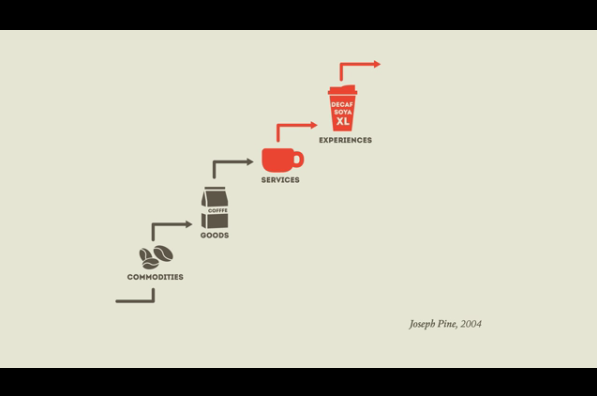
Listen to example as a cup of coffee.
When it makes firstly , it was some commodities as coffee beans. it become goods as some drinks. The goods will be meet customer. Then SERVICE is generated at this position. Customers get the coffee. It become a "experience"


WHY DO WE HAVE TO CONSIDER SERVICE DESIGN?

Before the service design was defined, business people always considered to how to get the more profit and designers thought about how to making better visual works. But after they found it, they always think about how to deliver the service.


So, when we do service design, we can get the 3 good points.

1. Usable :

[Group project_Festizen] Draw an Idea


Our team got the motivation from friends.
They love music and music festival.


In KOREA, there are many kinds of festivals. even there are 9 small and big festivals in first half a year.


But our friends get the information by searching or waiting.

I thought using app, webpage of the festival and other's blog to compile is inefficient.


THEN,
how do they collect and compile their information from each channel?

When I get replies from them, I was very surprised.
They just put the schedules in their own calender.


So I could get the IDEA
from the uncomfortable and outdated problems.

I'm going to make music festival scheduler application can see at a time.


Already some of my friends said "I WANT IT!"